
As we close the book on 2025, it feels like the SEO landscape has shifted more in the last twelve months than in the previous twelve years. We’ve moved from talking about “AI coming” to living in a world where AI Overviews and LLMs are fundamental to how information is retrieved.
But for all the noise about the “death of SEO,” the reality is more nuanced. The discipline isn’t dying; it is evolving into something more complex, more technical, and ultimately, more human.
Here are my five key predictions for what 2026 holds for our industry.
1. Attribution becomes critical (and significantly harder)
For years, the SEO contract was simple: we created content for every stage of the funnel: awareness, interest, decision, and we measured success by the traffic landing on our site.
That contract is breaking.
With the maturity of LLMs, the Awareness, Interest, and Evaluation stages are increasingly taking place “offsite,” inside the black box of LLM interfaces like ChatGPT or Gemini. Users are getting their answers without ever clicking a blue link.
Brands still need to be visible in these upper-funnel stages, but measuring that visibility is about to get much harder. You can’t track a click that never happens.
What this means for 2026:
- Brands must get comfortable creating content designed to influence LLMs, not just to drive direct traffic.
- We will move away from pure session-based metrics toward measuring “Share of Model”. That means understanding how LLMs perceive and cite our brand, even if no traffic is sent.
- The obsession with direct attribution must evolve into an appreciation for brand visibility within the AI ecosystem.
2. Google will not separate “AI Mode” traffic in Search Console
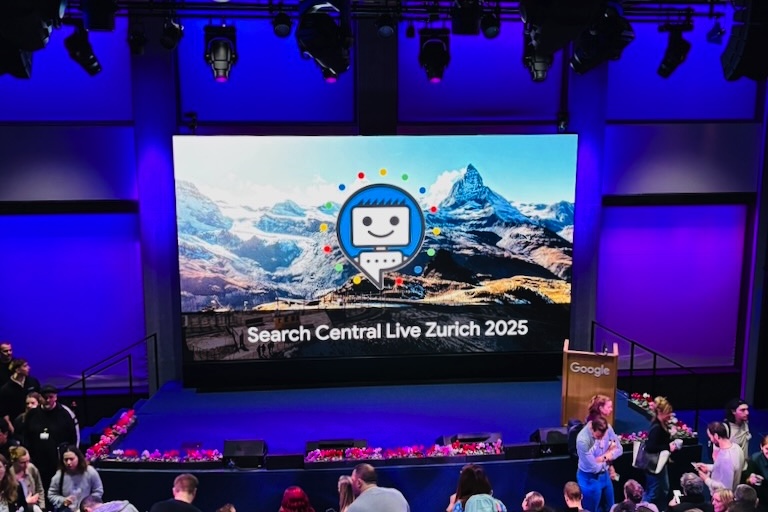
There is a massive appetite in the SEO community for transparency regarding AI traffic. When I attended Google Search Central Zurich in December 2025, I wasn’t the only one asking the Google team when we would see a dedicated filter for “AI Mode” in Search Console.
Despite the high demand, I don’t think it will happen.
The message from the Google team was clear: AI Mode and AI Overview traffic are part of the “open web.” I believe this means traffic from these modes already fits neatly into the existing filters we already have (Web, Image, Video, News).
Furthermore, Google has a vested interest in keeping this traffic somewhat obscured. As mentioned in my first point, AI interfaces likely drive less direct traffic than traditional search due to zero-click answers. Highlighting a drop in clicks specifically attributed to AI would not be a good look for the rollout. Expect AI traffic to remain blended with general “Web” results.
3. Increased consumer demand for human-written content
The pendulum is swinging back. In 2024 and 2025, we saw a flood of AI-generated sludge hitting the web. Now, we are seeing the backlash.
Users are actively being turned off by obvious AI content. You see it on platforms like LinkedIn every day: the generic structure, the hollow tone, it is an immediate turnoff. I expect more mainstream audiences to begin to recognise and be turned off by the “uncanny valley” of poor AI-generated content.
A warning to CMOs: particularly those who laid off their content teams to replace them with prompts. 2026 will be the year of the “content debt” repayment.
- Brands will face a massive task to update, improve, or strictly prune the worst of their AI content from the last few years.
- The age of “mass-content marketing” is over.
- Success will come from maintaining a tight library of high-quality, human-led content that is genuinely relevant to customers, not just keyword-stuffed for bots.
4. Technical SEO becomes more important (again)
For a while, it felt like Google had solved the JavaScript problem. Googlebot became incredibly efficient at rendering JS, and we stopped worrying about it as much.
That complacency ends in 2026 (and already has for some)
While Google can handle JavaScript, the new wave of AI crawlers like OpenAI’s GPTbot cannot effectively crawl or render JavaScript content yet.
If you want your brand to be visible in ChatGPT or other LLMs, you could be back to square one with technical SEO. If these bots can’t render your content, you don’t exist in their world. This is no longer just an “SEO concern”; with board-level interest in AI visibility, Technical SEO is moving up the food chain.
At Atkinson Smith Digital, we have already supported several businesses in fixing critical JavaScript issues in 2025, and I expect this demand to skyrocket as companies realise their fancy JS frameworks are hiding them from the AI future.
5. Other search channels grow, but Google is still No. 1
We love a “Google Killer” headline, but predictions of ChatGPT replacing Google are vastly overblown in my opinion.
Yes, ChatGPT will continue to grow its user base. However, AI search within Google (including AI Overviews and Gemini) will remain the significantly bigger market.
- Don’t neglect traditional Google results. They are still the bedrock of traffic.
- The breadth of queries is expanding. AI isn’t just cannibalising old search; it’s creating new ways to search.
- We are looking at a future with more surfaces to be visible on, rather than a binary switch where one platform kills another.
Google is entrenched, and with its own aggressive integration of AI into the SERPs, it isn’t going anywhere.
Final Thoughts
2026 will be a year of recalibration. We are moving away from the “publish everything” mentality of the early AI boom and returning to the fundamentals: technical excellence, genuine human insight, and a smarter approach to attribution.
If you are worried about how your brand is showing up (or not showing up) in this new AI-driven landscape, we should talk. Get in touch today.